Walla Walla — Confederated Tribes of the Umatilla Indian Reservation
Rosa Paul
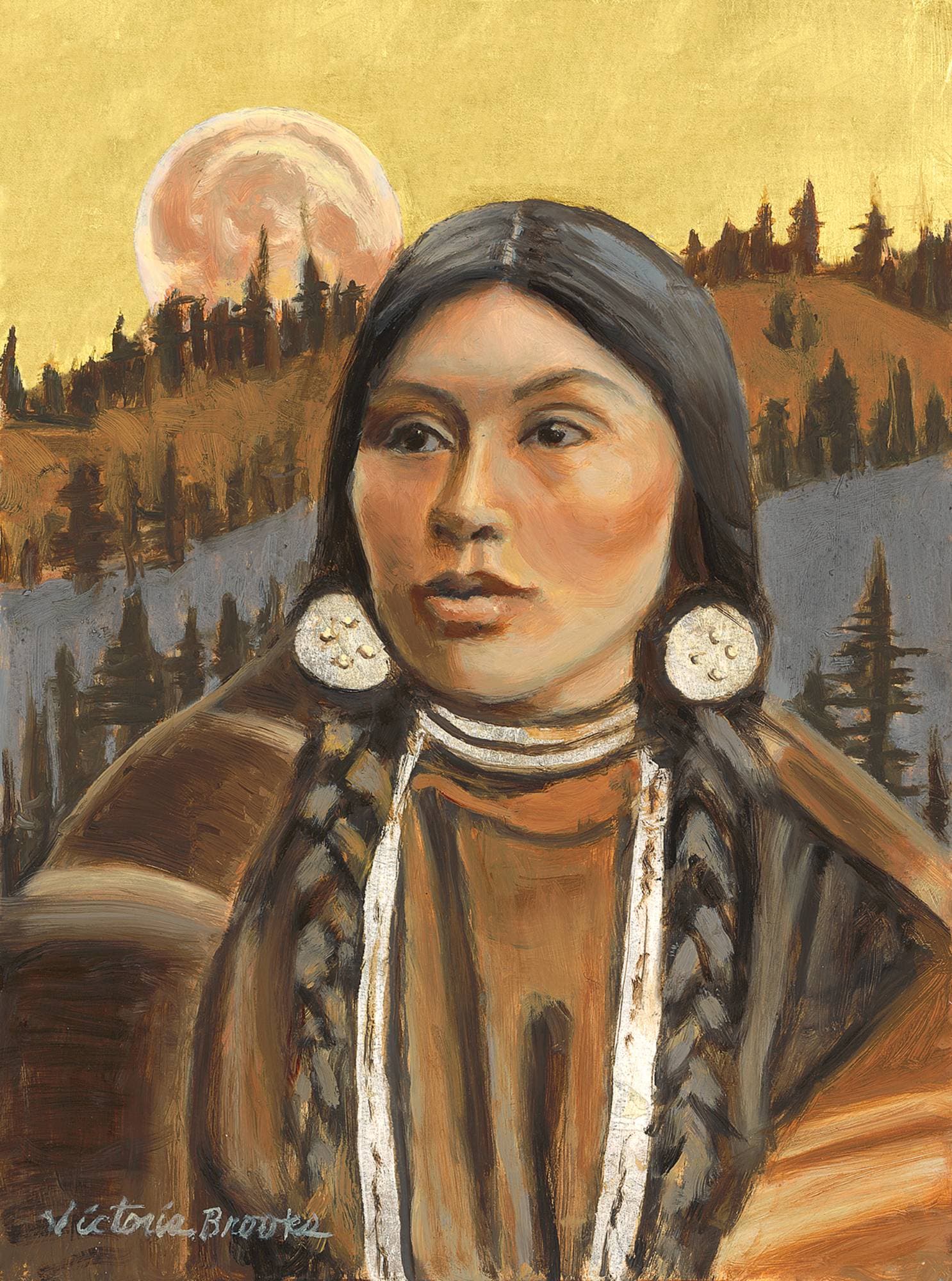
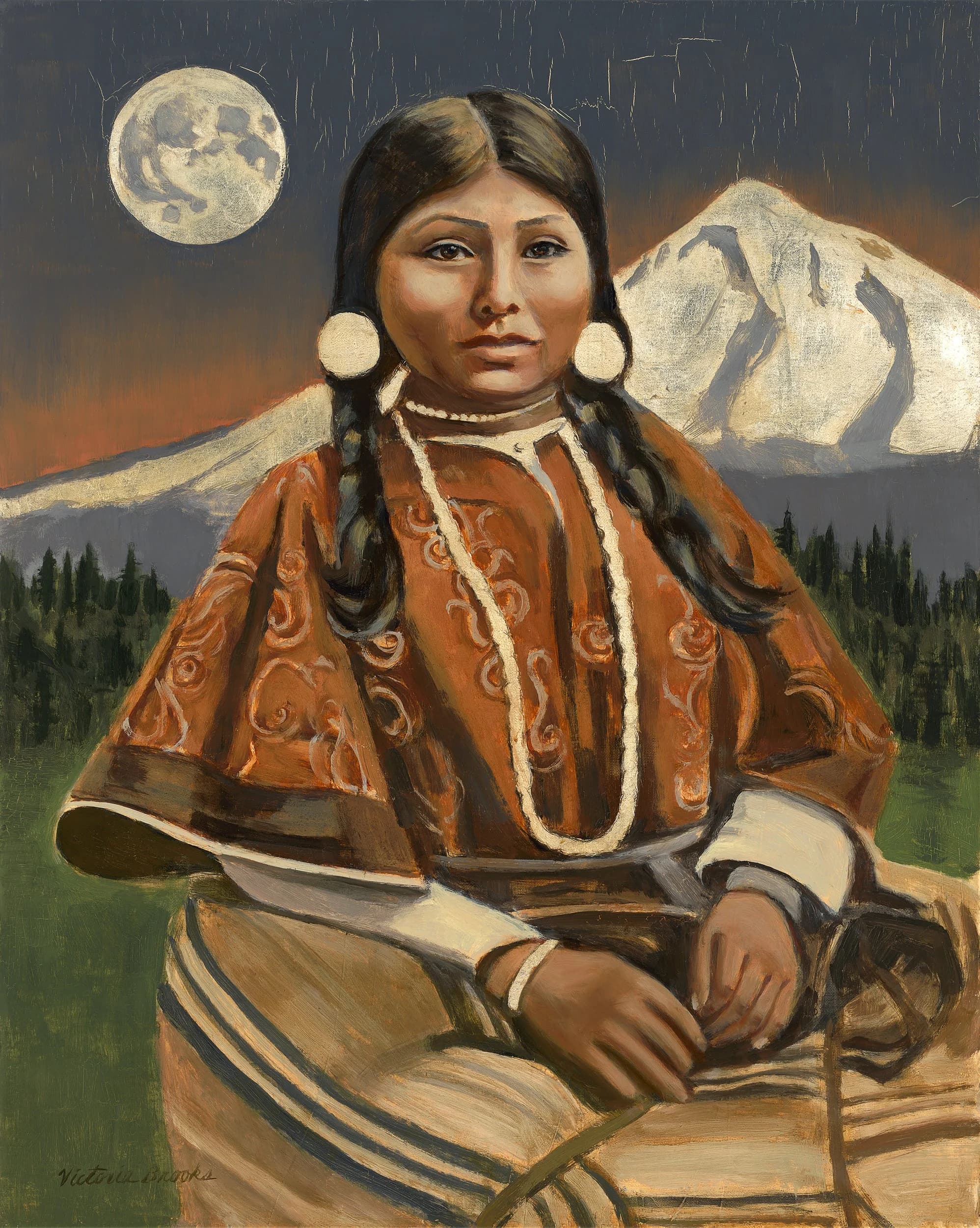
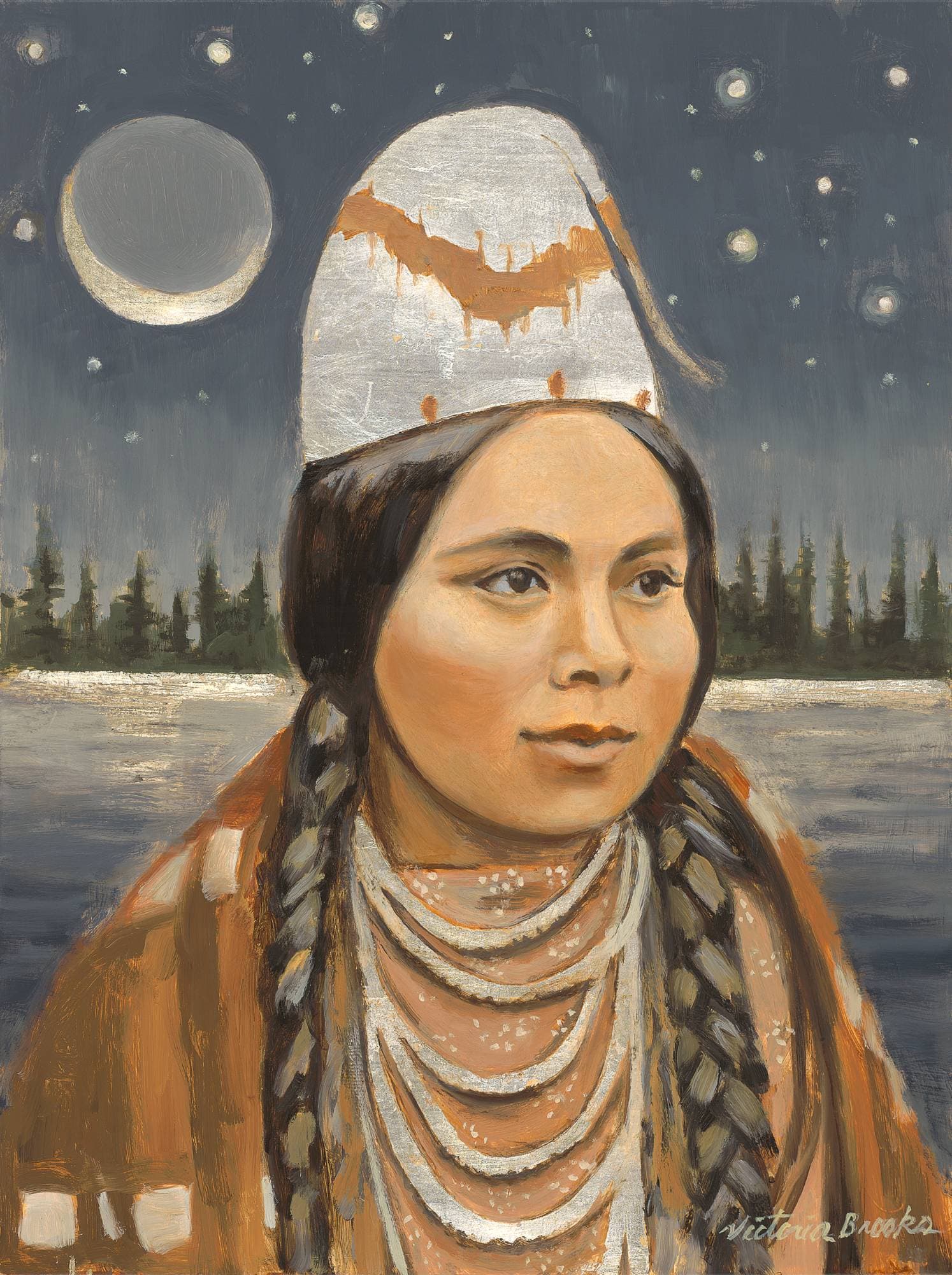
Rosa Paul stood for Lee Moorhouse's camera more than once, and her name traveled with the negatives. Three plates from one outdoor sitting survive at the University of Oregon, each marked Rosa Paul, Walla Walla Tribe. She stands on a Pendleton blanket before a plain blanket backdrop: fringed buckskin dress strung with beads, a twined basket hat with a V-shaped design on her head, a baby laced into a floral-beaded cradleboard on her back. Moorhouse titled one plate Summer Hair. In another she holds a bow and arrow, studio props of the kind he kept on hand. Two further plates place her beside a tipi covered in woven tule mats.
The hat is the flat-topped, fez-shaped basket hat of mid-Columbia women — twined rather than coiled, from beargrass and Indian hemp, with cornhusk worked in by Moorhouse's day, its stepped and zigzag designs carried in dyed fiber. Women made these hats and women wore them, for daily work and for occasions such as first-foods feasts and weddings; the craft belonged to the southern Plateau, at home among the peoples of the Umatilla, Nez Perce, Yakama, and Warm Springs reservations. Necklaces of shell and bead carried their own geography: dentalium, gathered off Vancouver Island and traded south and upriver through the great mart at The Dalles and Celilo, had passed as ornament and wealth on the Columbia for centuries.
Of Rosa Paul herself the archive keeps images and a name, not dates. There is no recorded birth year and no family history in the files; one tipi plate carries the cataloguers' caution 'possibly misidentified,' with a note that much of the clothing was the photographer's own prop stock — the files are candid about their limits. The Walla Walla, whose homeland lay along the river that bears their name, had been settled with the Cayuse and Umatilla east of Pendleton under the treaty of 1855. Her negatives are described today in collaboration with Tamástslikt Cultural Institute, and what they hold is certain as far as it goes: a woman, a child, and a name written on glass.
The Photograph
- Photographer
- Lee Moorhouse
- Year
- Between 1900 and 1910
- Collection
- Moorhouse (Major Lee) photographs, University of Oregon Special Collections; digitized on Oregon Digital, with records reviewed by Tamástslikt Cultural Institute
A sitting sequence of three plates, one titled 'Summer Hair,' plus two beside a tule-mat tipi — one flagged 'possibly misidentified' by the cataloguers. Some regalia in the sequence were the photographer's props.