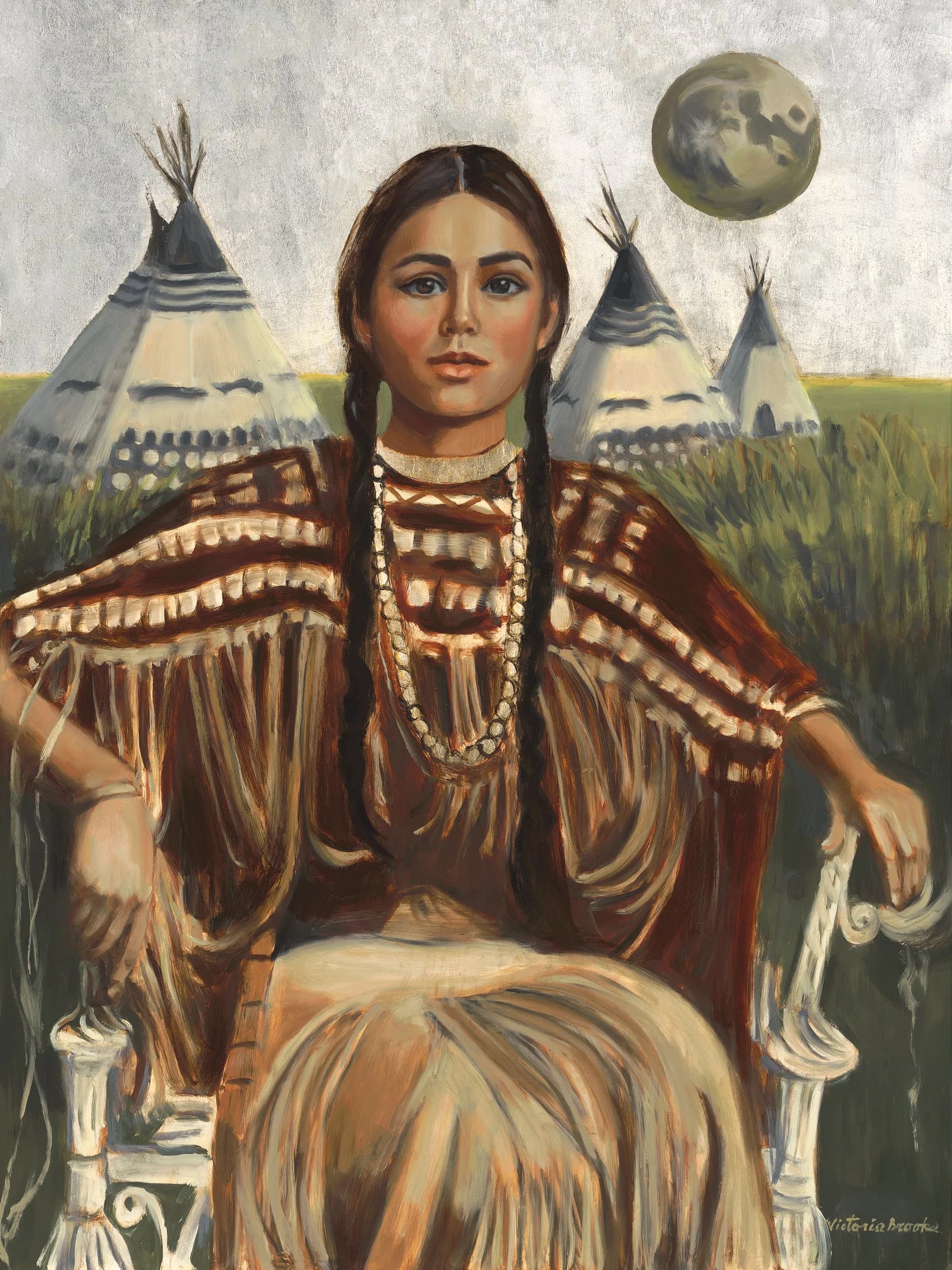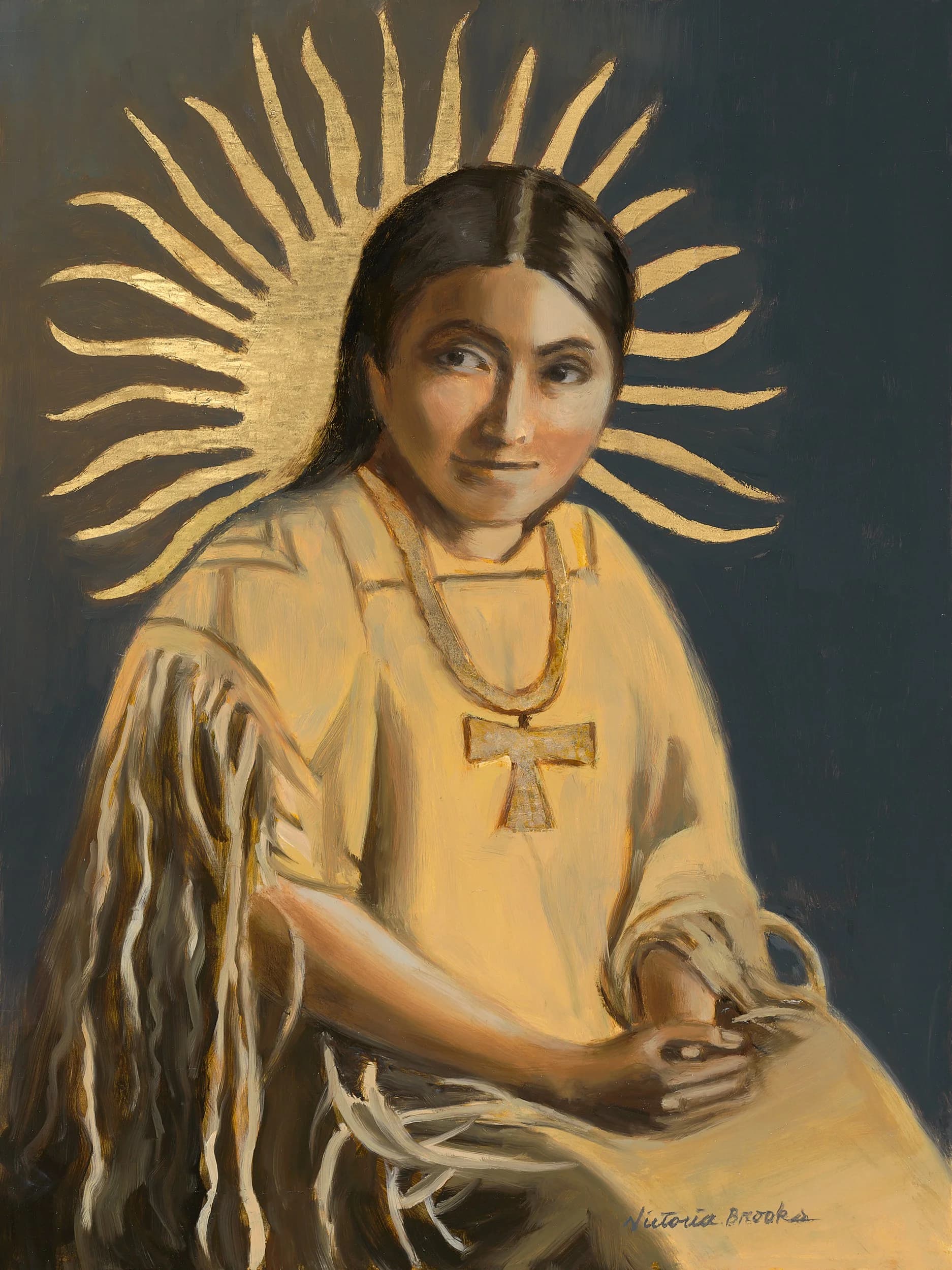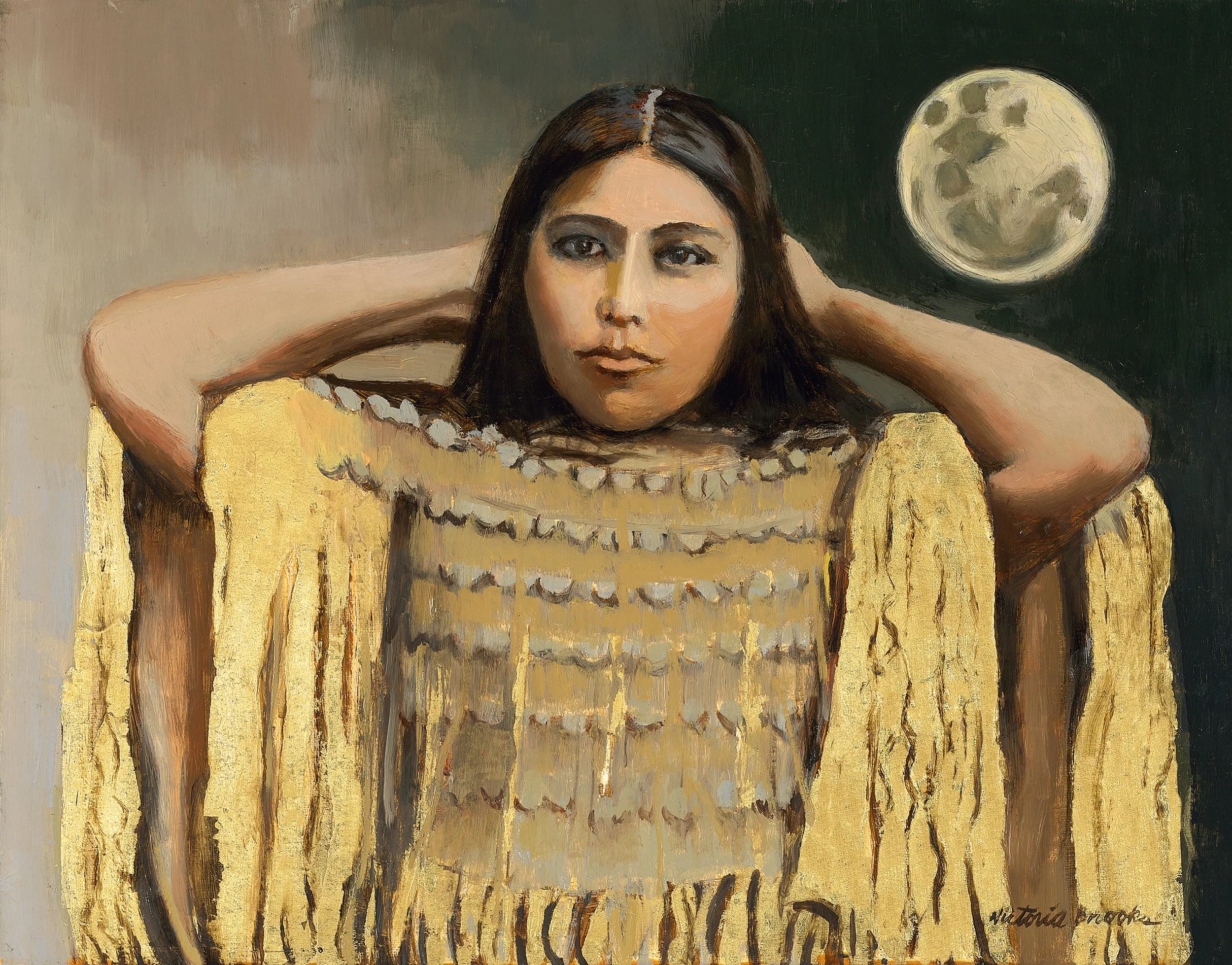
Kiowa
Annie Kiowa
In the late 1890s a Kiowa woman stood before the camera of a photography studio in Chickasha, Indian Territory, wearing a dress of soft elk skin sewn with rows of elk teeth. The studio was that of William E. Irwin, who photographed Kiowa, Comanche, and Apache people around Anadarko and Fort Sill from the mid-1890s. His caption gave her only two words, “Kiowa Annie,” and added the detail the picture trade cared about: the dress was “valued at $1,000.00.”
The dress deserves the notice, though not the price tag alone. Each cow elk carries only two ivory teeth, so a dress trimmed with hundreds of them represented years of hunting and trading and a family's regard for the woman who wore it — a garment of wealth and honor in the Kiowa way, not a costume. Annotations that traveled with the Smithsonian's copy of the portrait add that she had been away to school and spoke English: clipped notes that say as much about what white viewers wished to measure as they do about her.
Her Kiowa name went unrecorded, and “Annie” is how the archives still file her — at the Oklahoma Historical Society and in the National Anthropological Archives. She faced Irwin's lens in the last years of the Kiowa-Comanche-Apache reservation, shortly before allotment broke it up after 1901 and statehood followed. The portrait keeps what the caption left out: a particular woman, dressed in her family's pride, meeting the camera in Chickasha more than a century and a quarter ago.
The Photograph
- Photographer
- William E. Irwin, Chickasha, Indian Territory
- Year
- c. 1895–1898
- Collection
- Oklahoma Historical Society; Smithsonian National Anthropological Archives
Captioned “Kiowa Annie,” in an elk-skin dress trimmed with elk teeth “valued at $1,000.00.”