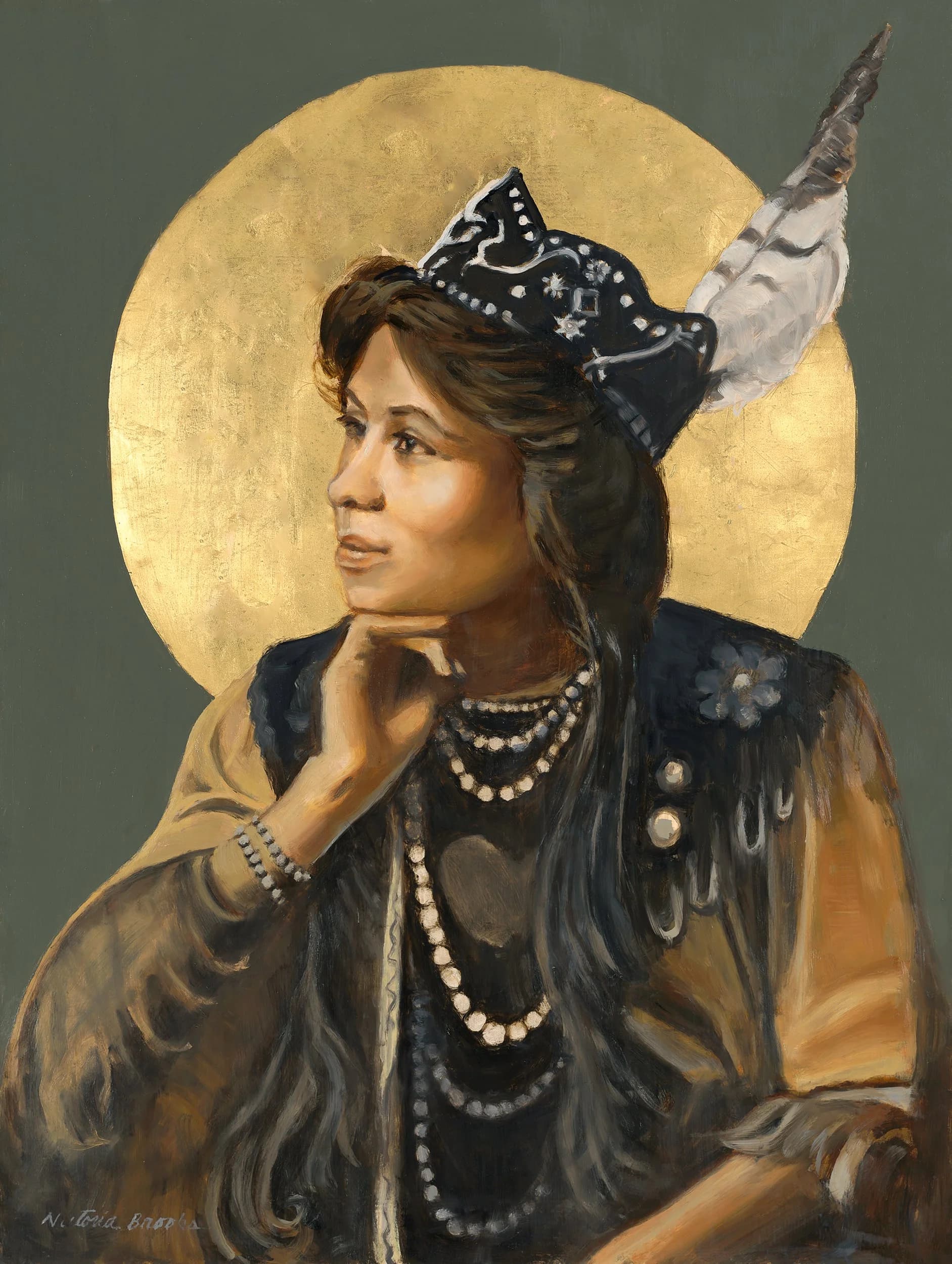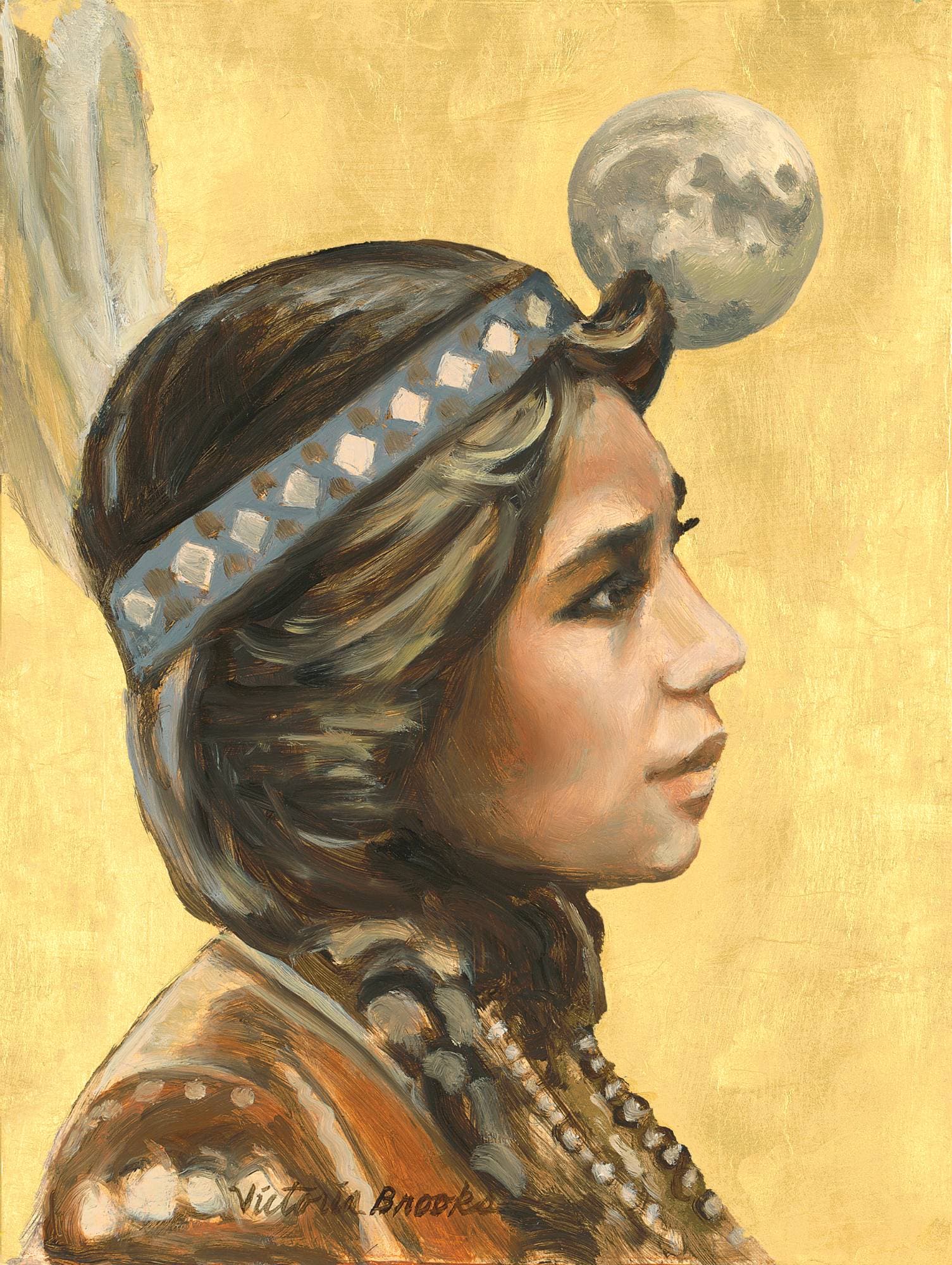
Seneca (Haudenosaunee)
Ah-Weh-Eyu
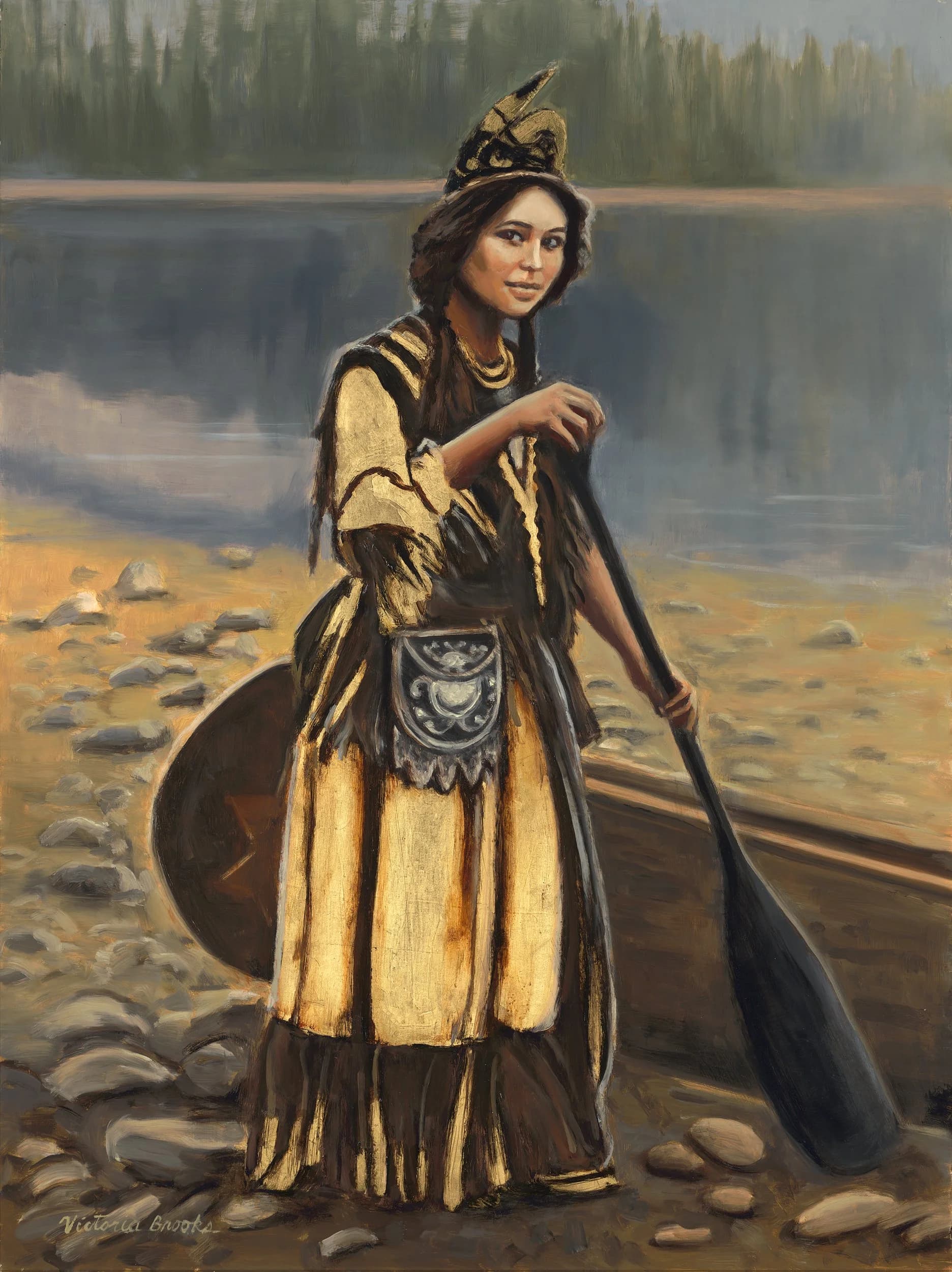
Painted as “Pretty Flower with Canoe”
1892 – 1974
The girl in the canoe is Ah-Weh-Eyu, 'Pretty Flower' — Goldie Jamison, later Goldie Jamison Conklin — a Seneca of the Heron Clan from the Allegany Territory, whose story is told with her studio portrait elsewhere in this series. This second image belongs to a particular moment in American picture-making: the real-photo postcard boom. Around 1908 the Blessing Studio of Salamanca, New York — a railroad town standing almost entirely on land leased from the Seneca Nation — posed the teenaged Goldie on the water in buckskin and beadwork, and sold the scene by the rackful to tourists and mail-order collectors.
The tableau was staged; that was the business. Blessing photographed Goldie again and again, indoors and out, and the Cattaraugus Cutlery Company of Little Valley put her face on advertising postcards for its 'Indian Brand' knives. In many photographs she holds Seneca raised-beadwork bags, likely her own handiwork — the kind Seneca women actually made and sold. Her off-camera life was modern and specific: born in Salamanca in 1892, married to Charles Conklin around 1912, six sons, and later a farm at Silver Creek remembered warmly by her grandchildren. The camera dressed her as a timeless 'Indian maiden'; she was a working model with a name, a clan, and a payday.
Yet the setting was not a lie. The Allegheny — Ohi:yo', 'beautiful river,' the Seneca name for the whole stream — runs through the middle of Allegany Seneca life, and its flats and channels carried Seneca canoes for centuries before a photographer thought to charge for the view. Goldie lived to see what became of that river country. Between 1960 and 1965 the Army Corps of Engineers built Kinzua Dam, breaking the Canandaigua Treaty of 1794; the reservoir drowned some ten thousand acres of the Allegany Territory, and the river towns below Salamanca were emptied, burned, and flooded, displacing about six hundred Senecas. Some called the pool Lake Perfidy.
Goldie Jamison Conklin died in 1974, less than a decade after the waters rose. The postcard, made when she and the century were young, now holds a doubled image: a real Seneca woman afloat on her nation's river, inside a fantasy manufactured for sale — and around her, the river country her people would spend the 1960s mourning. The painting keeps the girl, the canoe, and the bright water together, before all the taking.
The Photograph
- Photographer
- J.L. (Jesse Lynn) Blessing, The Blessing Studio, Salamanca, New York
- Year
- 1908
- Collection
- Real-photo postcards in private collections; Blessing's 1908 portraits of Ah-Weh-Eyu are digitized at the Internet Archive
A staged outdoor postcard scene on the water; the canoe variant survives chiefly on collector postcards captioned with her Seneca name.
Sources & further reading (3)
- https://archive.org/details/ah-weh-eyu-pretty-flower-from-the-seneca-tribe-circa-1908-.-picture-by-jl-blessing
- https://www.alleghenyfront.org/the-complicated-history-of-the-kinzua-dam-and-how-it-changed-life-for-the-seneca-people/
- https://iroquoisbeadwork.blogspot.com/2011/04/goldie-jamison-conklin-seneca-from.html