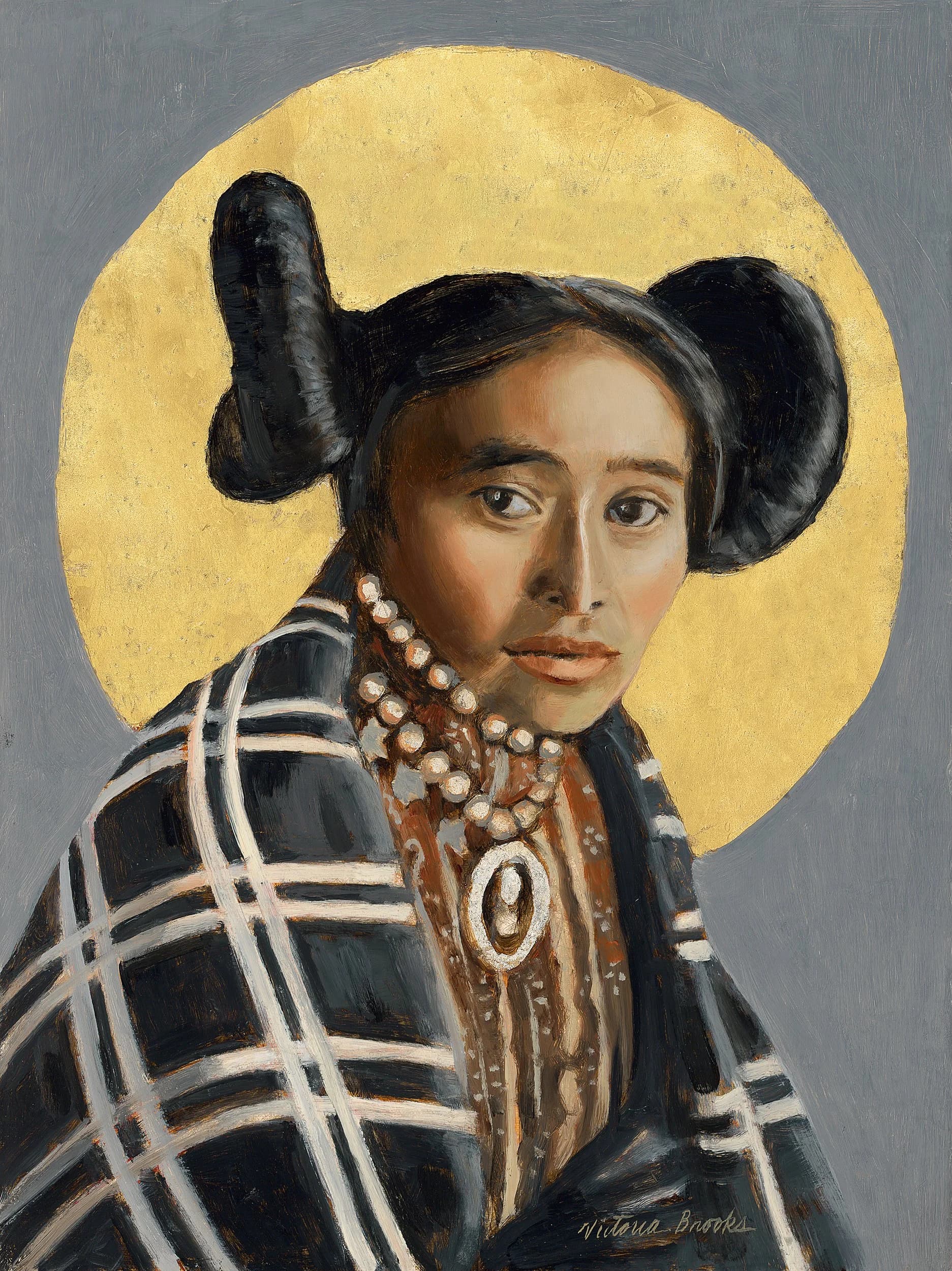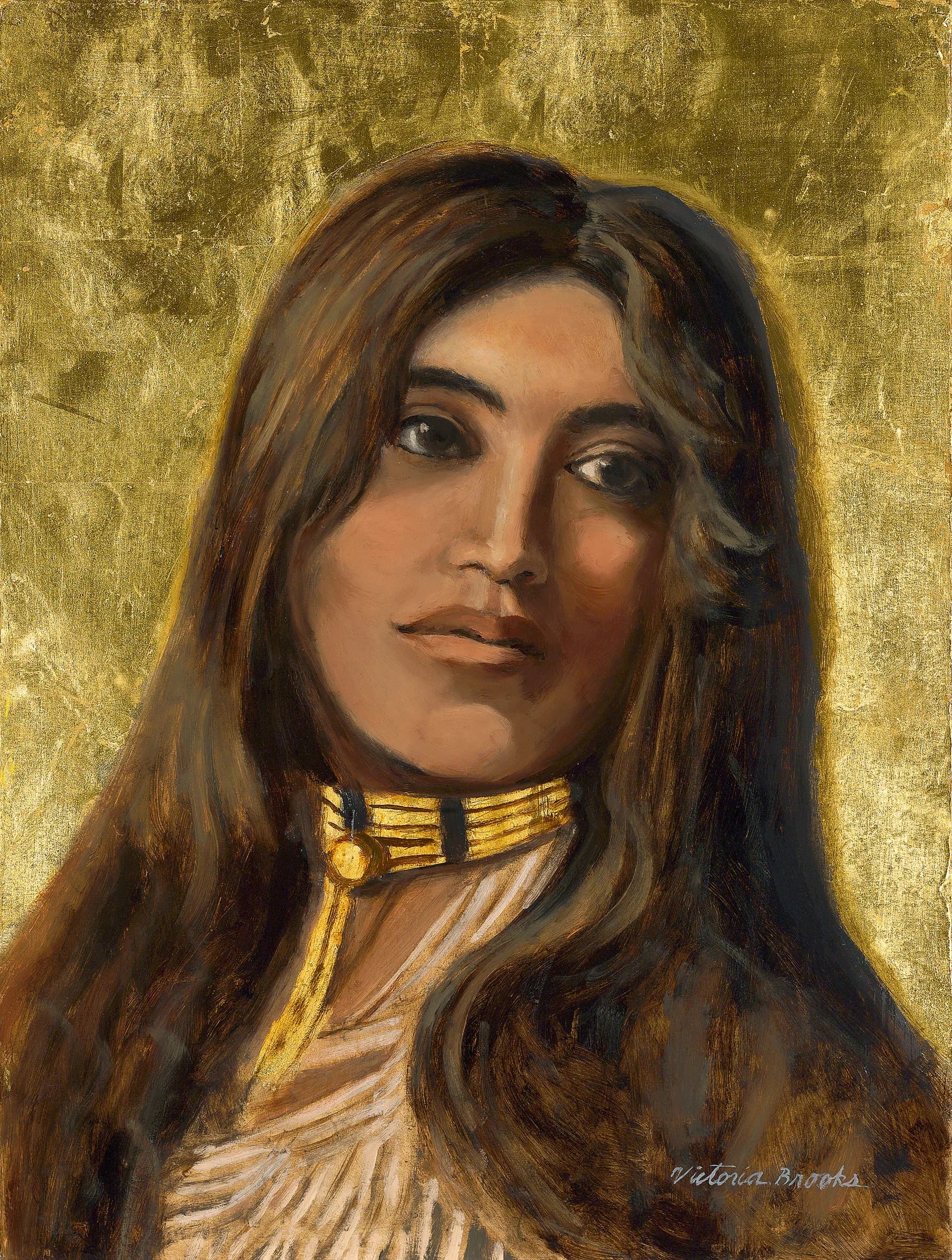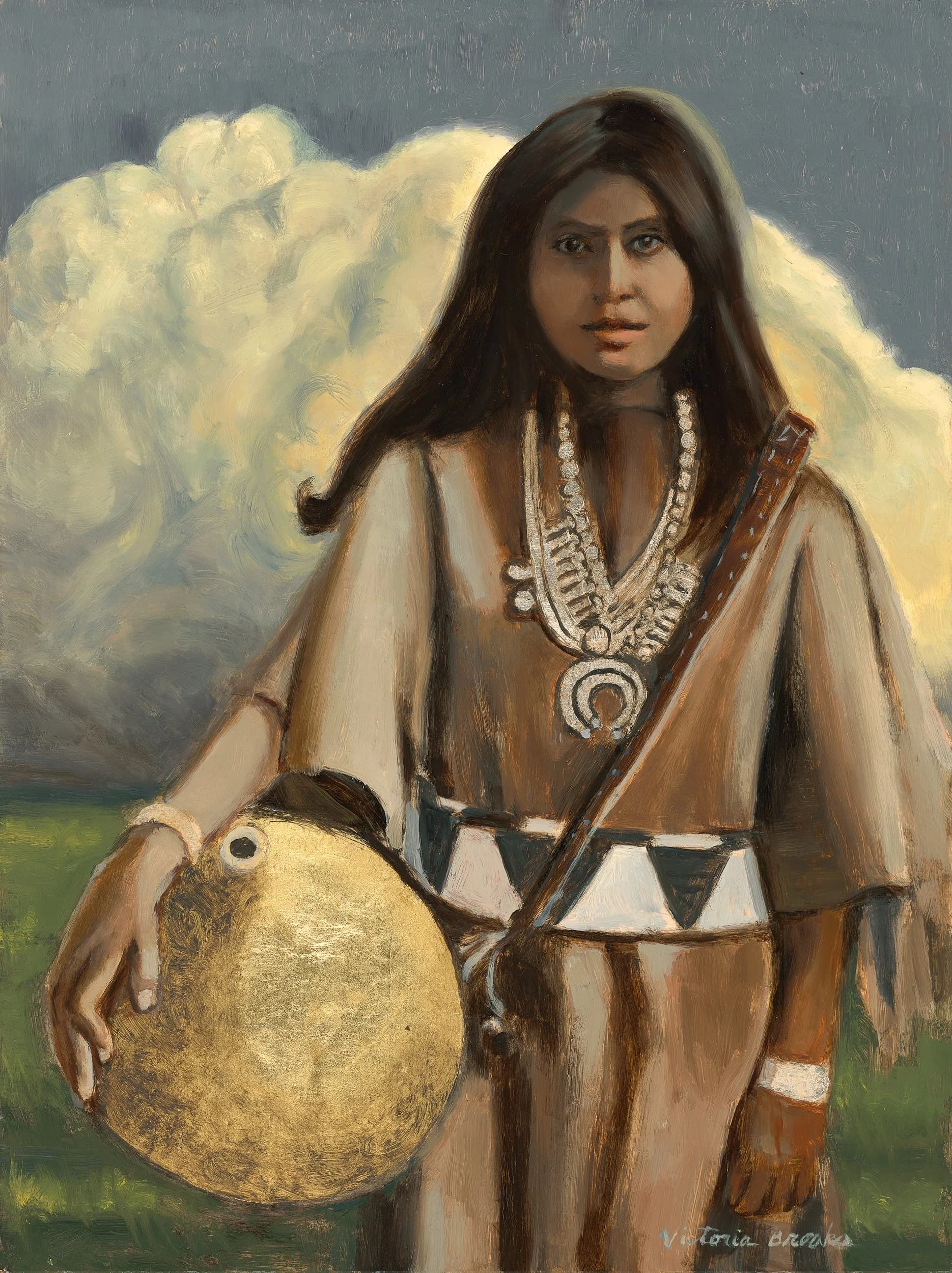
Laguna Pueblo (K'awaika), New Mexico
Loti-kee-yah-tede
Painted as “Loti-Kee-yah-tede”
In 1905 the photographer Carl E. Moon, newly established in Albuquerque, made a series of portraits at Laguna Pueblo — K'awaika, one of the pueblos strung along the Rio San José in west-central New Mexico. His most reproduced plate from that visit he titled “Loti-kee-yah-tede — The Chief's Daughter.” It shows a young woman in the dress of her pueblo, a woven belt at her waist, strands of beads at her throat, meeting the camera with a level, unhurried gaze. The original glass negative survives in the University of New Mexico's Center for Southwest Research.
Moon was among the more careful of the era's pictorialists. Between 1904 and 1917 he photographed across Arizona, New Mexico and Oklahoma, staying in communities long enough to learn names where many contemporaries recorded none — and this sitter's name has traveled with her picture for more than a century. Recent collector and community posts render it Kee-yah'-ta-di and identify her as Lotta Atsye, Atsye being a longstanding Laguna family name. That fuller identification circulates widely but has not yet been confirmed in an institutional record, and it should be held gently until Laguna families and archives can confirm it.
Laguna in 1905 sat directly on the Santa Fe Railway, and its people — farmers, potters, herders — had been negotiating waves of outsiders for centuries while holding to Keresan language and ceremony. Moon's romantic title tells us little about her actual standing: Laguna leadership did not work like a European court, and “chief's daughter” was the photographer's shorthand for an audience back east. What the portrait itself preserves is more valuable — the particular face of a young K'awaika woman at the turn of the century, at ease in the clothing of her mothers and grandmothers as a new century arrived around her.
The Photograph
- Photographer
- Carl E. Moon
- Year
- c. 1905
- Collection
- Center for Southwest Research, University of New Mexico; Moon materials also at the Huntington Library
Moon's own title: “Loti-kee-yah-tede — The Chief's Daughter,” Laguna Pueblo, New Mexico. The original 5×7-inch glass plate negative survives at UNM.