Hopi
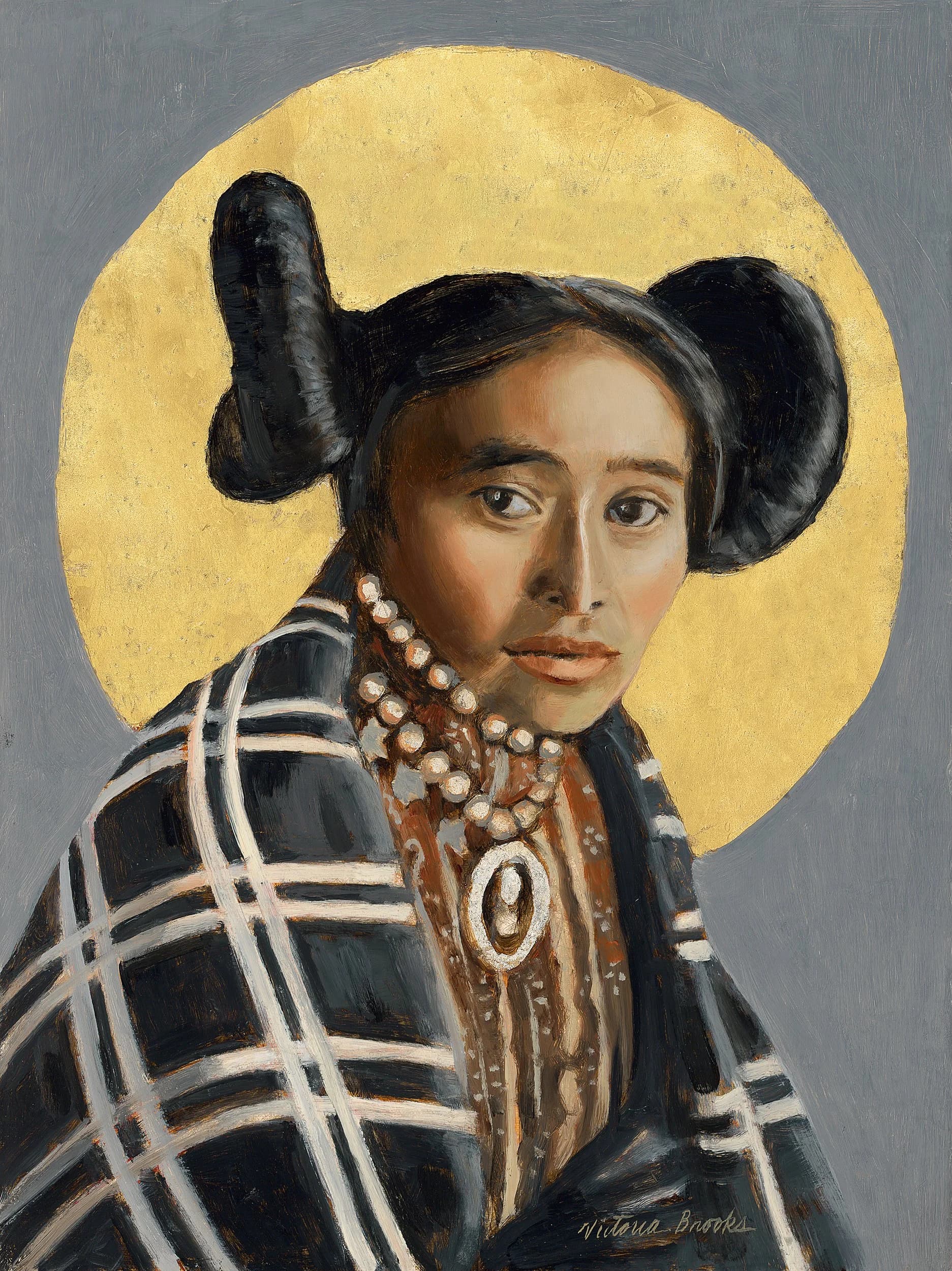
Hopi Girl
The photographer did not record her name. What follows is the history her photograph carries — offered as context, not biography.
The portrait tradition behind this painting is unmistakable: a Hopi girl wearing her hair in two glossy side whorls, the style often called squash-blossom or butterfly whorls. It marked a particular moment in a girl's life — worn after coming of age and before marriage — and it was made by hand and by kin: a mother or female relative wound each side of the hair over a curved wooden bow, tied it at the center, and spread it into a wheel. The form carried meanings of readiness and fertility, and it echoes through Hopi art in Polik-mana, the Butterfly Maiden katsina who brings pollination and rain to a dry-farming people.
Between roughly 1900 and 1910 this hairstyle became one of the most photographed sights in the Southwest. Edward S. Curtis made portrait after portrait at the Hopi mesas — one 1905 sitting survives at the Library of Congress under the breezy title 'Miss Hopi' — while Henry Peabody photographed a woman dressing an unmarried girl's hair in 1900, and Carl Moon, working for the Fred Harvey Company at the Grand Canyon, made images the railroad tourism industry printed on postcards and brochures. The girls in those photographs were living through the boarding-school era and the 1906 split of Oraibi; the pictures show none of that pressure.
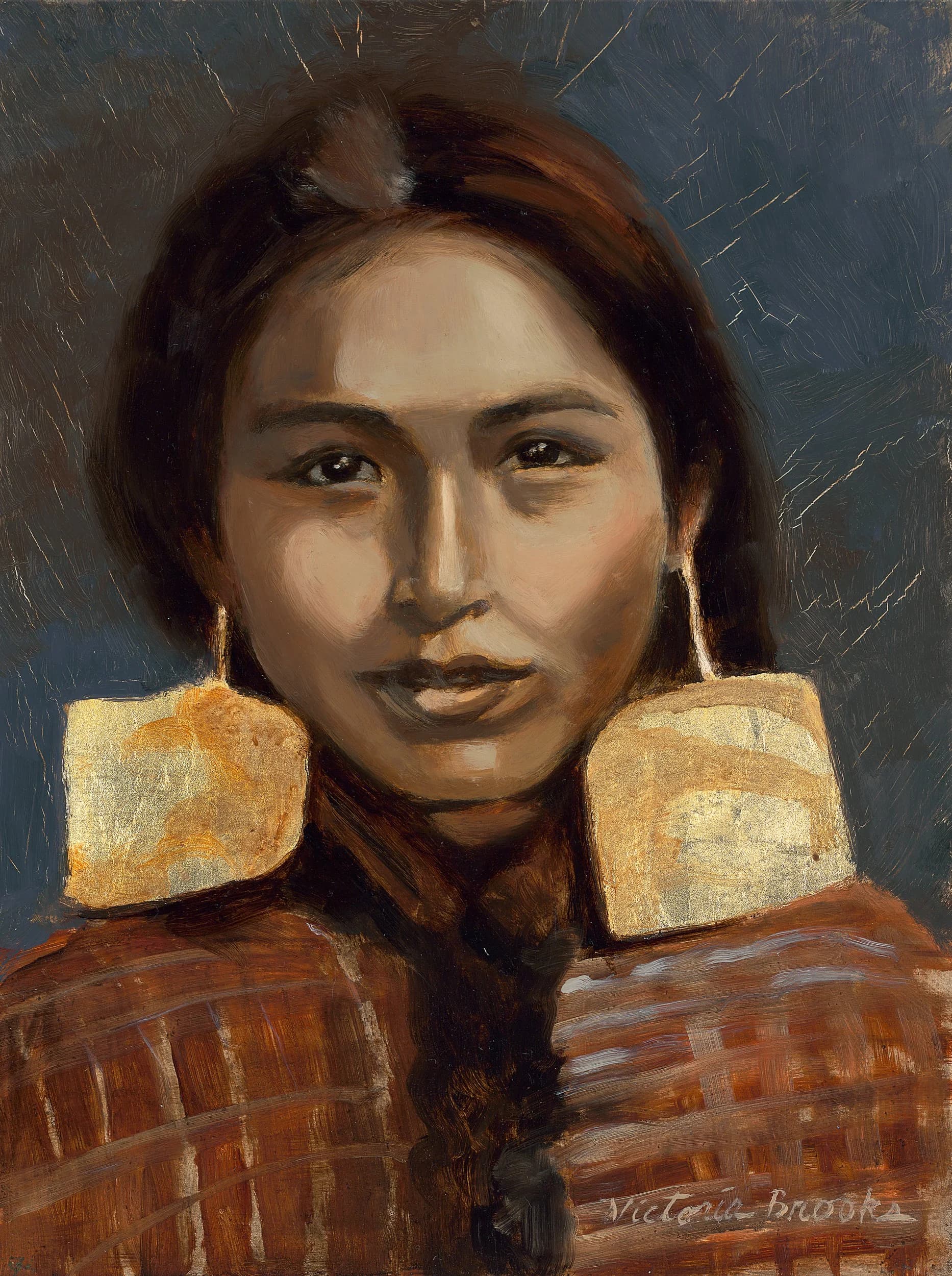
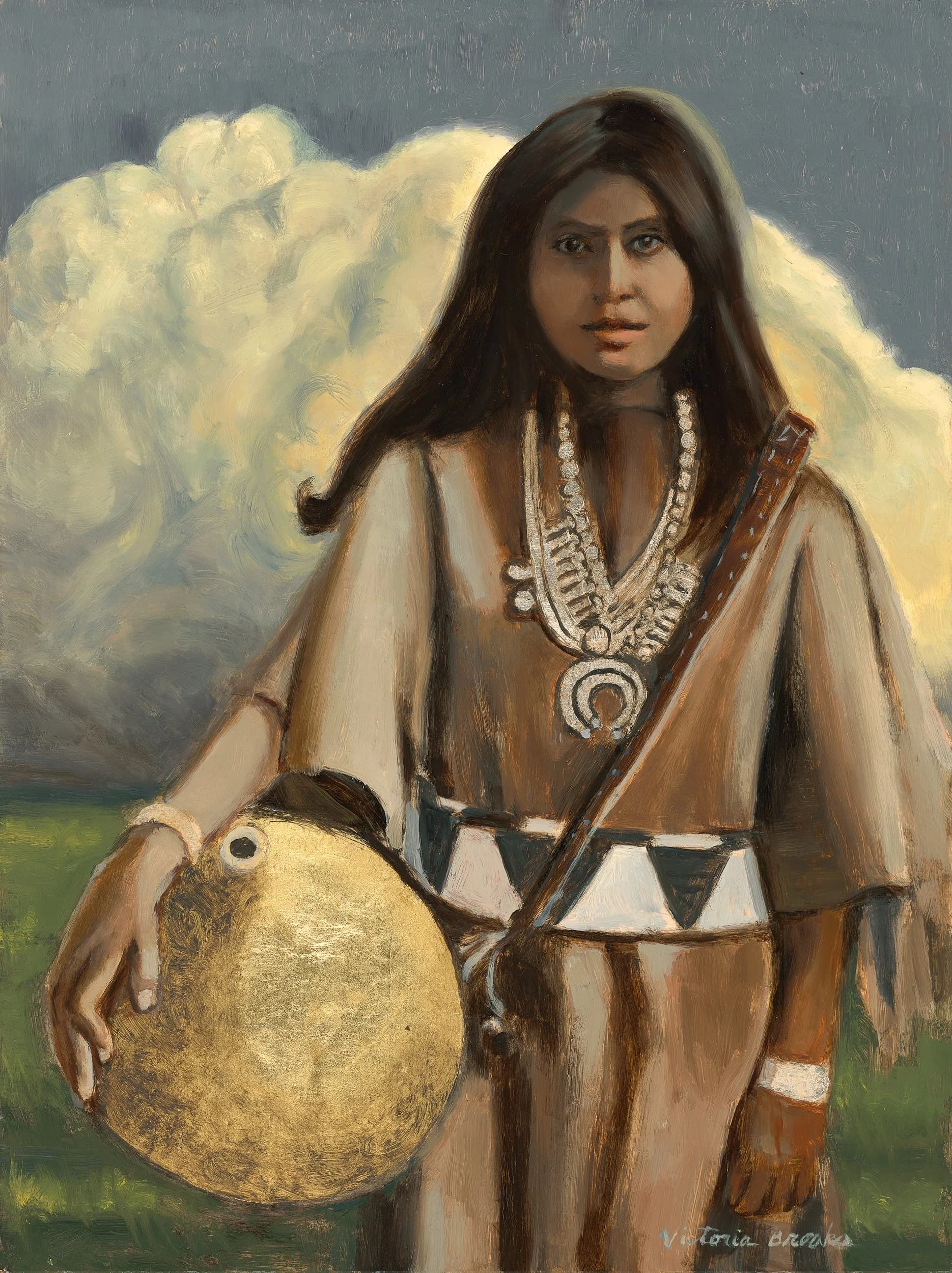
Almost none of those sittings recorded a name. Curtis framed his project as the record of a 'vanishing race,' and that ideology — since thoroughly criticized — treated girls like this one as types rather than neighbors, even as Hopi communities were in fact enduring and adapting. Her hairstyle was personal: someone who loved her made it that morning. This painting begins there, with the individual the camera actually saw, and stands with a people who remained — returning presence and dignity to a girl the caption never named.
The Photograph
- Photographer
- Attributed variously — Edward S. Curtis, Carl Moon, or Henry Peabody
- Year
- c. 1900–1910
- Collection
- Library of Congress (Curtis Collection); Smithsonian NMAI, Fred Harvey Company collection
Many near-identical portraits of unnamed Hopi girls wearing the squash-blossom whorls survive from this decade — one 1905 Curtis sitting is held at the Library of Congress under the title 'Miss Hopi.'