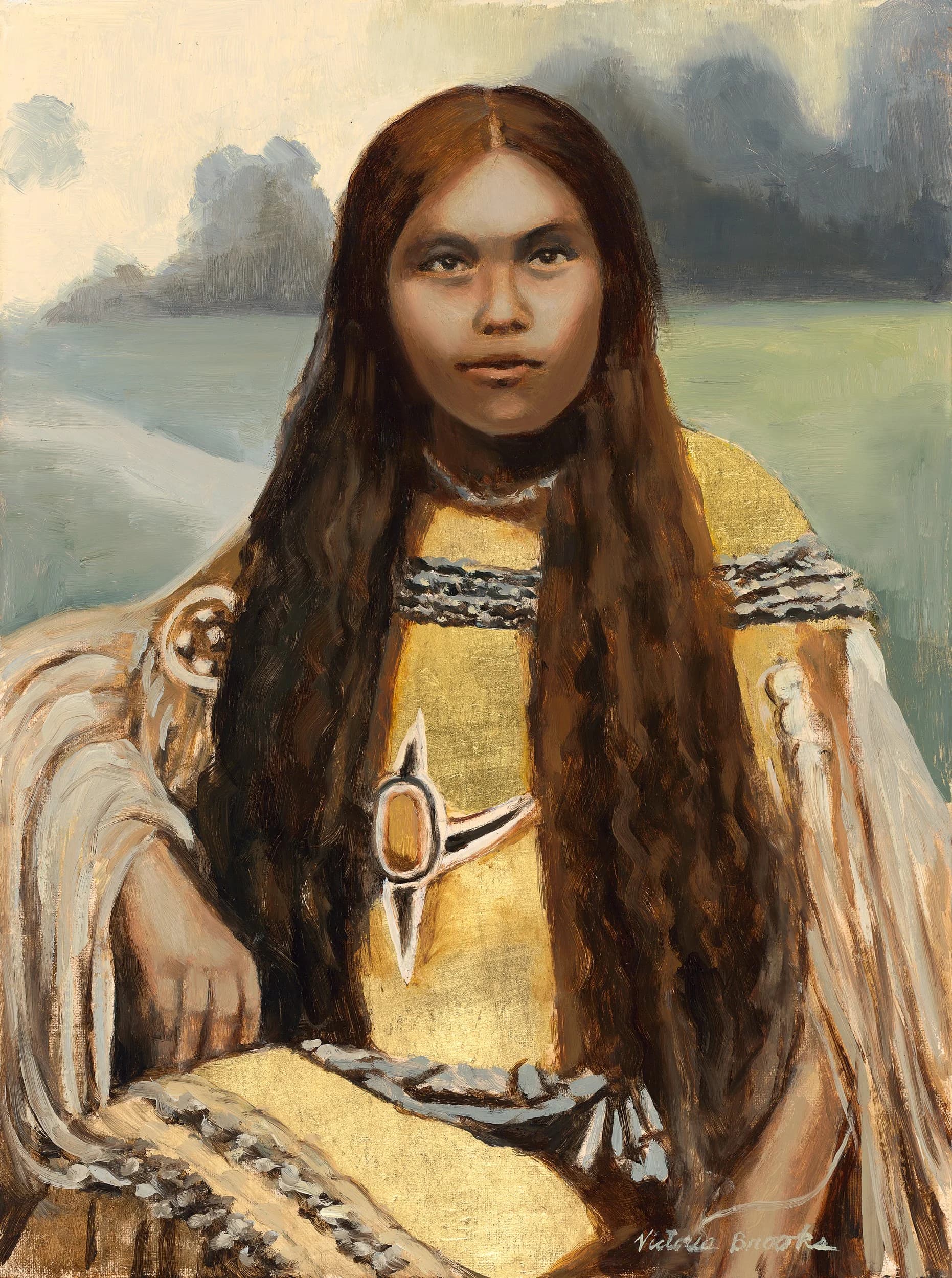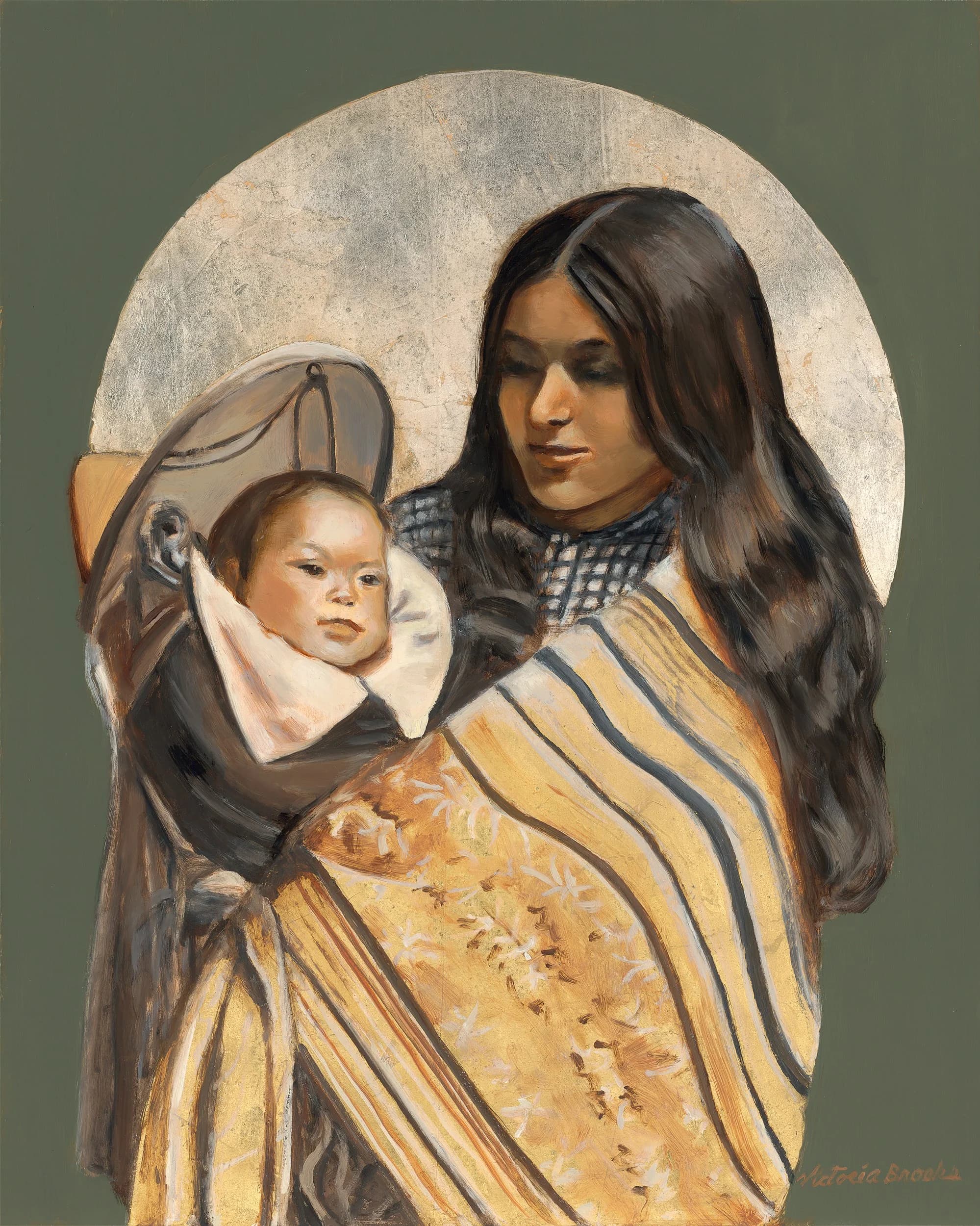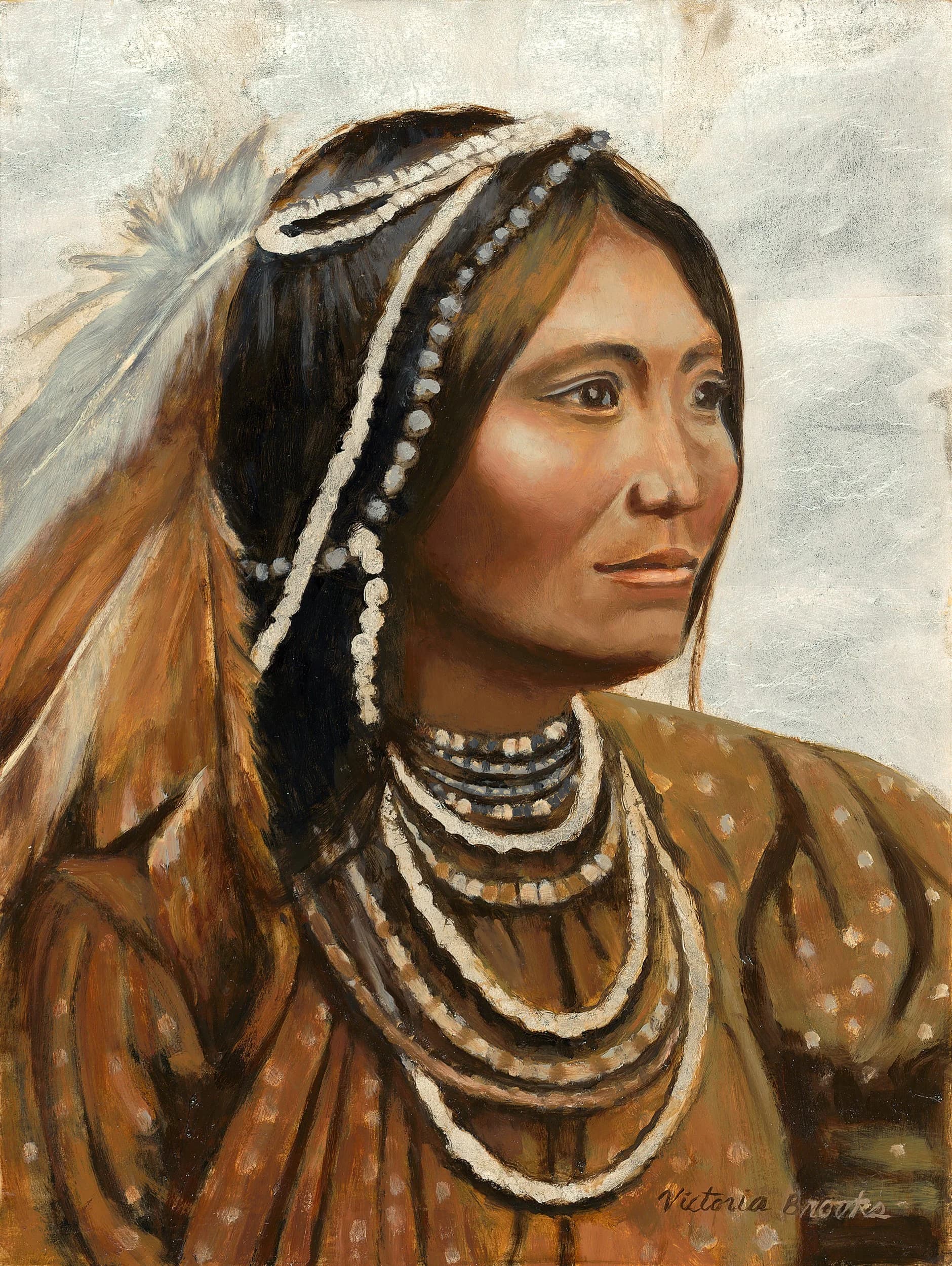
Apache
Apache Woman
The photographer did not record her name. What follows is the history her photograph carries — offered as context, not biography.
The archives hold dozens of photographs captioned simply 'Apache woman.' Some were made in territorial studios by A. Frank Randall, who photographed Chiricahua and Western Apache people around San Carlos between 1883 and 1888; others by Ben Wittick, by Edward S. Curtis on his 1903–1906 Apache visits, or by small commercial outfits like the Lubken Company of Mesa, whose 1907 'Apache portraits' show two unnamed women and a baby with baskets. The women in them wear the full-skirted calico camp dress of the era and strands of trade beads, and they are often posed with the coiled baskets and pitch-sealed water jars Apache women wove with celebrated skill.
Behind every such portrait stands one of the hardest passages in American history. In 1886, after Geronimo's surrender, the Chiricahua — including women, children, and elders who had never left the reservation — were shipped east as prisoners of war, held in Florida, Alabama, and finally at Fort Sill in Oklahoma until 1913. Western Apache families confined at San Carlos endured rations, heat, and the outlawing of their ceremonies under the federal Code of Indian Offenses, which for decades pushed observances like the girls' Sunrise Ceremony out of public view. Through it all, women held households together, gathered and farmed, and turned basketry into both art and family income.
Randall occasionally wrote names on his mounts — one portrait is captioned as the wife of Cochise — but the prints that circulated to parlors and postcard racks rarely carried them; most said 'Apache woman' or worse. The camera kept her face, her dress, the pattern of her beads, and discarded the one thing her own people would have led with. This painting cannot restore what the caption never held. It can insist she was a particular person — someone's daughter, likely someone's mother — and offer her the sustained, respectful attention a studio's minute never did.